
The Short Definition
Badatz Eida HaChareidis (בד״ץ העדה החרדית, "Beis Din Tzedek of the Chareidi Community") is the central kashrus authority of the Eida HaChareidis, a chareidi community organization in Jerusalem founded in 1918. It is widely regarded by Ashkenazi chareidi kehillos worldwide as the strictest mainstream hechsher — enforcing Chalav Yisrael, rigorous Pas Yisrael standards in many applications, strict shemittah observance, and yashan-where-applicable as default positions.
When a chassidish or yeshivish family says "we want Badatz," Eida is almost always the Badatz they mean. When a hotel says "we're Badatz," it almost always means Eida as well — but not always, and that's the detail worth pressing.
What the Certification Covers
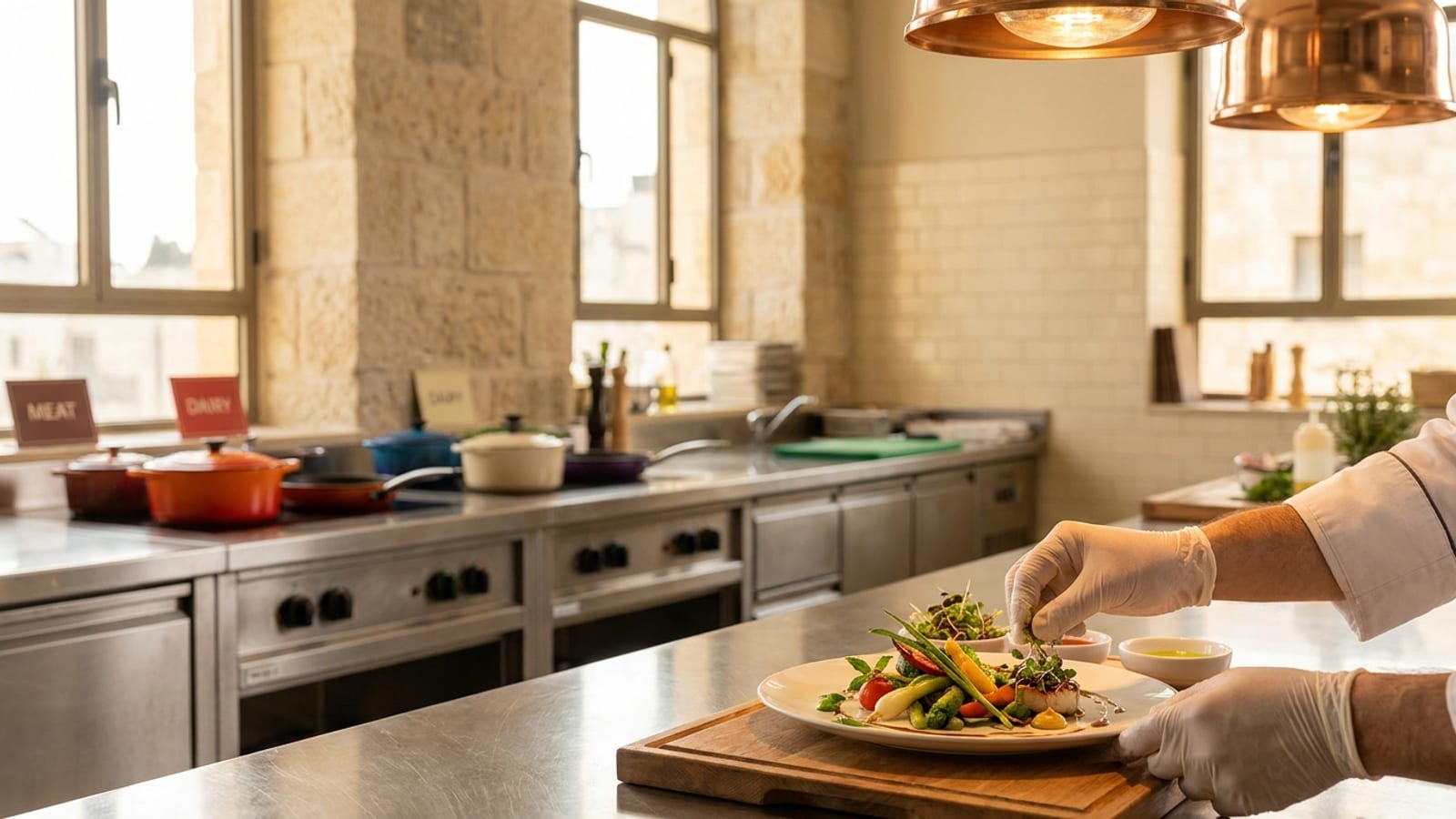
An Eida-certified hotel has its main kitchen, food-preparation staff, vendor chain, and banquet operation under Eida supervision, with a Mashgiach Temidi (continuously-present mashgiach) during operating hours. Covered under the certification:
- Bakery partnership and bread sourcing
- Meat sourcing and preparation
- Fish and produce
- Dairy — with Chalav Yisrael as the default standard
- Wine and all Eida-specified vendors or protocols
For Yamim Tovim, the hotel either runs a dedicated Eida-approved Pesach/Sukkos program (with a program director and additional mashgichim) or elevates its year-round Eida operation with yom-tov-specific oversight. Both are acceptable; the specifics matter and are worth confirming per year.
What the Certification Doesn't Automatically Cover
In some Jerusalem hotels the main restaurant holds Eida but the lobby coffee station, minibar, lobby fruit plate, or third-party café inside the property holds a different (sometimes lower) hechsher. This is common, legal, and not hidden — but it's also not what most families hear when the booking agent says "the hotel is Badatz."
Here is how each JRM Hotels property stands:
- Haneviim Boutique — Badatz Eida HaChareidis across the full operation: lobby coffee, minibar, room service line, and banquet space.
- Yirmiyahu 33 — Mehadrin by HaRav Efrati (with Mashgiach Temidi) throughout. A stringent mehadrin standard — not Badatz Eida.
- Prima Palace — Badatz Agudat Yisrael throughout.
For a family whose standard is Eida-specifically-throughout, Haneviim Boutique is the placement, and we name this explicitly before booking.
If you have questions about which Jerusalem hotel fits your family's kashrus standard, we are glad to help you work through it.
Start the conversationThe Five Questions to Ask a Hotel
- Is Badatz Eida HaChareidis the hechsher throughout — main kitchen, room service, banquet, dairy café, lobby coffee, minibar?
- Is there a mashgiach on premises during relevant operating hours?
- Are Chalav Yisrael and Pas Yisrael default standards, or on-request?
- For Yamim Tovim — is it a dedicated Eida program, or the hotel's year-round Eida operation elevated for yom tov?
- For Pesach specifically — gebrochts or non-gebrochts? Who is the head mashgiach? What is the kitniyos separation for Sephardi families?
These five questions settle most of what a rav would want to know. For halachic questions, defer to your rav; our role is to give your rav the facts to answer.
Shemittah and the Eida Standard
The Eida HaChareidis holds one of the most stringent shemittah positions in Israel. The most recent shemittah year was 5782 (2021–22); the next is 5789 (2028–29).
During a shemittah year, the Eida does not rely on heter mechira (the conditional land sale used by the Rabbanut and some other authorities) and instead requires produce sourced via otzar beit din, from Arab-owned fields outside the halachic boundary, or from abroad. Eida-certified hotels are expected to source accordingly throughout the shemittah year — worth planning for if your trip falls in 5789.
In practice this means the hotel's produce vendor chain changes during a shemittah year, and some seasonal Israeli produce may be replaced with imported alternatives or otzar beit din supply. Families with specific shemittah concerns — or those whose rav has ruled differently on otzar beit din produce that retains kedushas shevi'is — should raise this with us before booking. We confirm a hotel's shemittah sourcing policy on request. As always, consult your rav for definitive psak.