
Yom Tov guide · this spring תשפ״ז / 2027
Pesach 2027 in Jerusalem,
for the family that travels together.
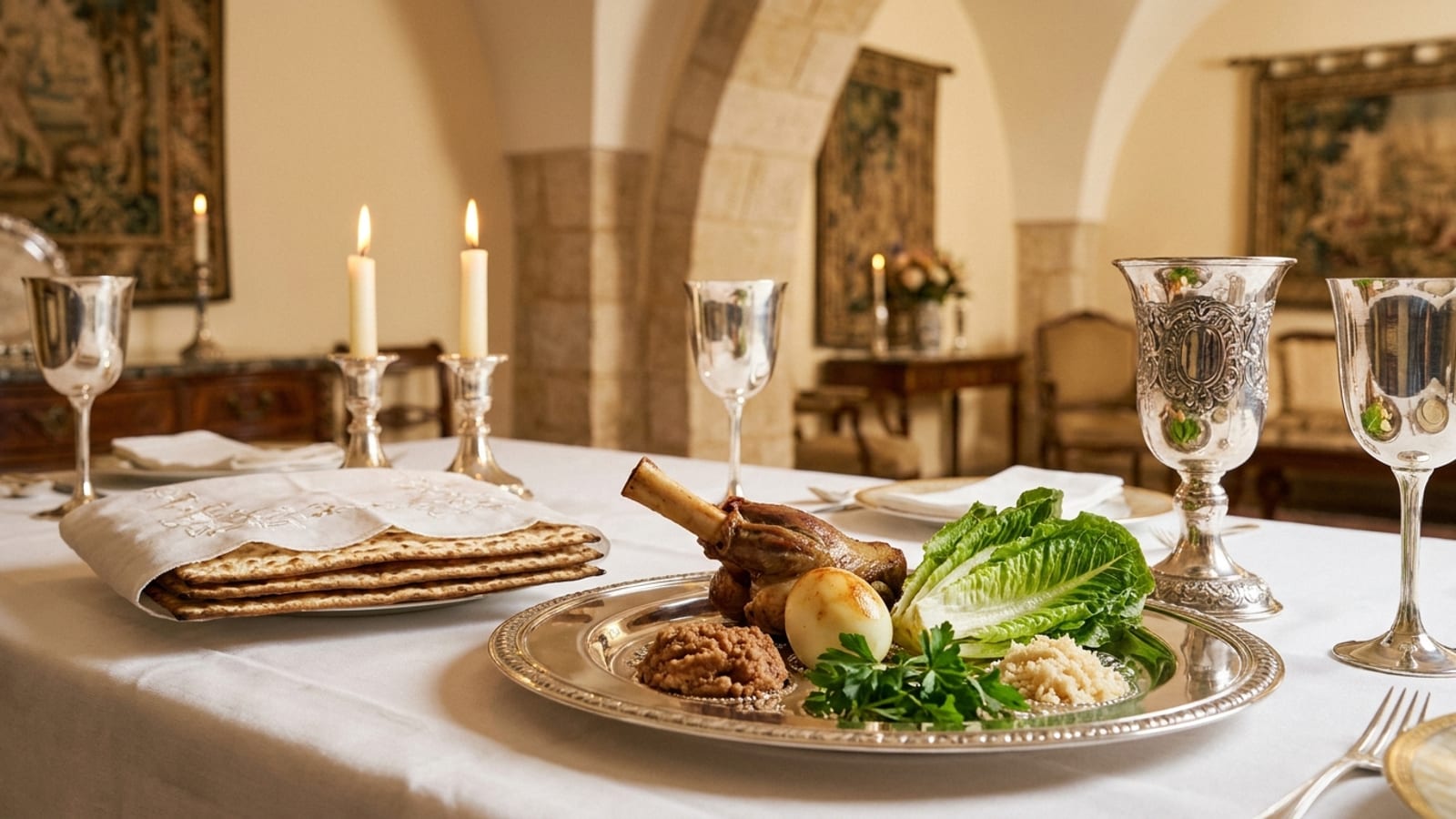
Three generations, one seder table, on a Jerusalem night.
This season: Begins Wednesday evening, April 21, 2027 (candle lighting in Jerusalem ~6:31pm); first Seder that night. Israel keeps 7 days through April 29, 2027.
Still booking Pesach 2027. Preferred rooms and multi-gen blocks go first — start the Pesach conversation or call 1-855-JRM-TRIP.
Further out: Pesach 2028 (תשפ״ח) — Apr 10–18 — after this season's inventory is handled.
The Timeline
Pesach hotel availability in Jerusalem tightens starting around Sukkos — six months out. Our covenant families start the conversation in Cheshvan (October–November) for the following Pesach. Families inquiring in Adar (February–March) are often too late for their first-choice hotel.
The longer the lead time, the better we can match you — not just to a room, but to the right floor, the right side of the building for Shabbos-morning sun, the right proximity to the specific minyan that suits your family.
The Questions We Ask First
- Which hechsher will the kitchen meet — Badatz Eida, Badatz Beit Yosef, Rabbanut Mehadrin?
- Gebrochts — does your family avoid it, and how does that interact with a 7-day Israeli Pesach (see note below)?
- Kitniyos avoidance strict? (And for the Sephardi branch if you're mixed-minhag — how does that get navigated?)
- How many people, across how many generations, on which dates?
- Where will Seder happen — at the hotel, in a rented apartment, at family in Israel?
- Who needs accessibility accommodations (low floor, grab bars, walker-friendly room)?
- Any medical considerations that intersect with travel?
The Multi-Generational Question
Pesach is almost always a multi-gen trip. That means we're not booking a hotel — we're orchestrating a family reunion with halachic, dietary, and physical-accessibility dimensions that have to work for 80-year-olds and 3-year-olds simultaneously.
- Grandma on the walker needs low floor.
- The bar-mitzvah cousin needs a room he can hear himself think in.
- The diabetic uncle needs a room-fridge that's not Shabbos-timed against him.
- The toddler twins need family-suite configuration.
- The pregnant daughter needs near-accessible bathroom.
- Everyone needs to be walkable to the same shul and the same Seder room.
We do this by treating every family member as a specific placement problem, not a bed count. The hotel's rooming list isn't handed in as a spreadsheet — it's built with each person in mind, then reviewed with you, then confirmed floor-by-floor with the hotel.
Pesach-Specific Kashrus Notes
Every hotel runs a distinct Pesach program. Even hotels with year-round Badatz Eida kashrus often need specific Pesach-certification arrangements — dedicated mashgichim, separate kitchens or cleared existing kitchens, separate dining spaces, specific utensil protocols.
We confirm in writing, before your deposit, what the Pesach program of your specific hotel is:
- Which rabbinic authority is supervising.
- Whether gebrochts is served (and in which dining rooms).
- Whether kitniyos is served for Sephardi families.
- What the wine selection looks like.
- What the matzah source is.
If your hotel's Pesach program doesn't match your family's standard, we tell you before you book, and we help you pivot.
A note on gebrochts: The gebrochts question is not a simple binary in Israel. In chutz-la'aretz, many non-gebrochts families permit gebrochts on the eighth day of Pesach. In Israel, Pesach is seven days — so families in that category face a question: is the seventh day of Pesach in Israel treated the same as the eighth day in chutz-la'aretz, or is the whole program non-gebrochts throughout? This depends on your family's minhag and your rav's psak. Some families keeping non-gebrochts in chutz-la'aretz eat gebrochts from the seventh day in Israel; others maintain non-gebrochts the entire week. If this applies to your family, raise it with your rav before you select a hotel — and tell us the answer so we can match the right program. We flag this proactively because it's the most common Pesach kashrus mismatch we see.
Chol HaMoed
Chol HaMoed Pesach in Israel is a trip within the trip. With three to four days between the first Yom Tov and the last day, many families plan excursions — the north, Masada, the Dead Sea, the Golan, national parks, or simply day-trips within Jerusalem to sites that are more accessible outside of Shabbos and Yom Tov. These days can make or break the family's memory of the trip; they're also where the logistics get complicated.
A few principles worth building around:
- Sunset timing governs more than you expect — arriving back before sunset matters for Shabbos-adjacent days, and Chol HaMoed trips in late April or May can have later-than-expected sunsets that compress your afternoon.
- Younger children hit a wall by mid-trip — building in a slow morning or a hotel-pool afternoon partway through often rescues the second half.
- Multi-generational coordination applies here too — grandparents and toddlers rarely have the same energy budget for a Chol HaMoed hike.
We include a Chol HaMoed pacing guide in your pre-arrival brief — general timing, travel durations, and how to structure the days without over-scheduling. We don't book specific tours or recommend specific operators; that detail we confirm in your pre-arrival brief.
The Seder Question
- Some families prefer the hotel's communal Seder — well-run, mashgiach-present, Rav leading, convenience for grandparents.
- Other families rent a private room within the hotel and run their own family Seder.
- Other families arrange Seder at relatives' homes in Israel and return to the hotel for the remainder of Yom Tov.
We've done all three. We'll help you think through which fits your family this year. There's no single "right" answer — only the right answer for the specific family in the specific year.
Our Pesach Hotels
- Haneviim Boutique (Badatz Eida HaChareidis) — for families requiring the Eida standard.
- Yirmiyahu 33 (Mehadrin by HaRav Efrati, with Mashgiach Temidi) — for families seeking mehadrin with full resort amenities.
- Prima Palace (Badatz Agudat Yisrael) — runs a serious Pesach program under the strictest standards.
- Jerusalem Gate (Badatz Mehadrin Rabbanut Yerushalayim + OU) — a specific-case placement for Pesach; we'd discuss whether it fits your family's standard before recommending it.
What it costs
Pesach in Jerusalem is sold as a full-board program rather than a nightly room rate — programs typically start around $6,500 per person, with Badatz-Eida programs running higher. We quote an exact, itemized figure for your family before any deposit. See our pricing page.
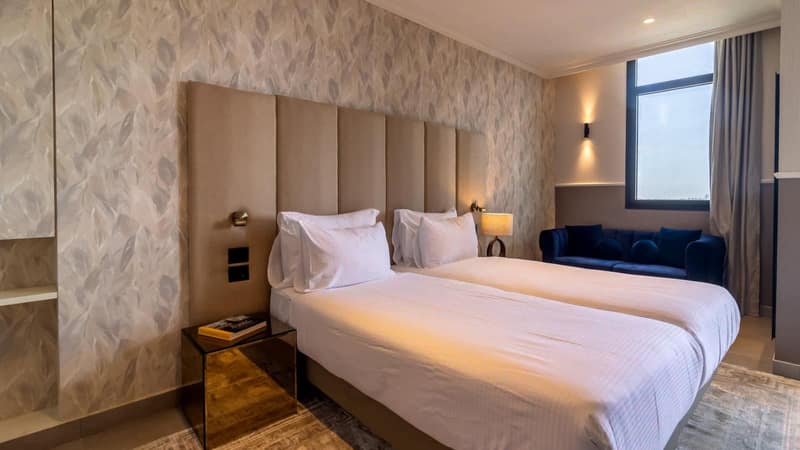
 Mehadrin by HaRav Efrati
 Romema
Yirmiyahu 33
A new, luxurious hotel on Yirmiyahu Street in Romema with Mehadrin kashrus supervised by HaRav Efrati and a full-time Mashgiach Temidi — plus pool, spa, underground parking with car charging, and ~5-minute walk to the central bus station and train.
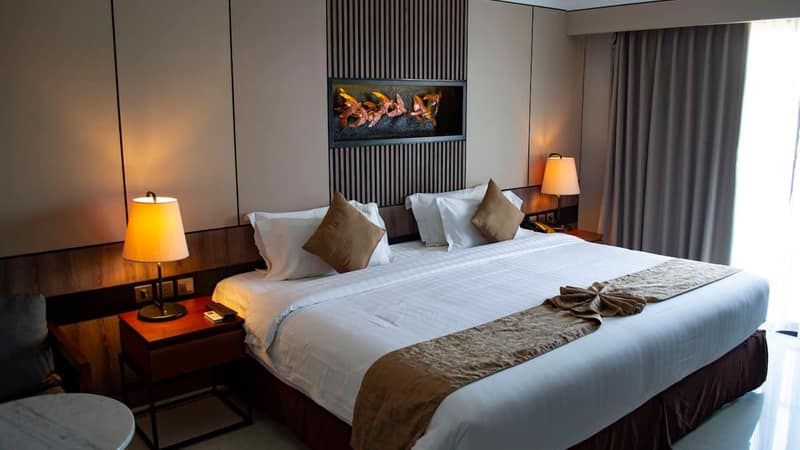
 Badatz Agudat Yisrael
 Pines Street
Prima Palace
A full-service kosher hotel at 2a Pines Street near Geulah and Mea Shearim with Badatz Agudat Yisrael kashrus, on-site mikveh and shul, daily Daf Yomi, free parking (limited, first come first serve), and easy access to the frum heart of Jerusalem.
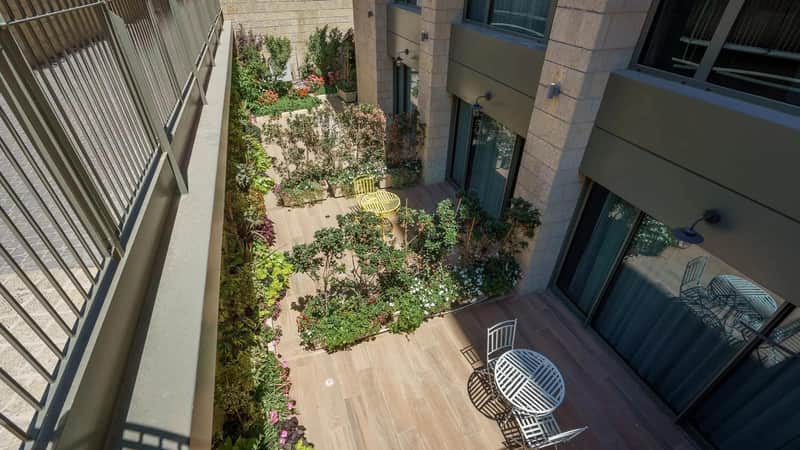
 Badatz Eida HaChareidis
 Haneviim Street
Haneviim Boutique
A boutique hotel and luxury apartment property on Haneviim Street with Badatz Eida HaChareidis kashrus — 49 hotel rooms and 8 apartments (2-night minimum, no meals), on-site mikveh and shul, daily Daf Yomi, rabbi on premises, and walking distance to the Old City.

 Badatz Mehadrin Rabbanut Yerushalayim
 Romema
Jerusalem Gate Hotel
The most affordable of the four JRM hotels — a 298-room glatt kosher hotel at 43 Yirmiyahu Street in Romema with Badatz Mehadrin Rabbanut Yerushalayim and OU supervision, direct access to Center One Shopping Mall and Fitness Club (free for guests), with light rail and central bus station nearby.
Passover Hotels Beyond Jerusalem
For the broader “passover hotels” decision layer (what a Pesach program is, national options, booking timeline), see our Passover hotels guide. This page stays focused on Jerusalem execution.
Not every Pesach trip is Jerusalem-only. Some families split the chag — Seder nights and the first days at one of the kosher hotels in Jerusalem, then Chol HaMoed in the north or at the coast. Others want the whole Pesach in a quieter setting outside the city.
For families looking at kosher hotels across Israel for Pesach — the Galil, Netanya, the Dead Sea — the kashrus landscape is different. Outside Jerusalem, mehadrin is hotel-specific rather than a city-wide standard: Kehillas Sanz in Netanya (Galei Sanz), Rav Landau in Bnei Brak, and several certifiers in Tiberias (Badatz Eida HaChareidis at Kinorot, Rabbanut Tiberias Mehadrin at Nof Kinneret). Elsewhere — Tel Aviv, Eilat, the Dead Sea — the standard is Rabbanut, with some resort properties holding OU or private mehadrin supervision on request.
We're happy to discuss Israel-wide Pesach options. Our deepest expertise is Jerusalem, but we know the kosher hotel landscape nationally and can advise on the kashrus and logistics of any Passover program in Israel — or tell you honestly when another concierge knows a specific property better than we do.
Ready to start?
Let's Plan Your Pesach
Start the conversation by Cheshvan for the following Pesach. Tell us about your family, your standard, your dates. We'll do the rest.
Plan Pesach in JerusalemPesach program confirmation ladder
Confirm the specific Pesach program, kitniyos/gebrochts policy, and room block in writing before anyone buys non-refundable flights.
- Program name and hechsher for that year
- Arrival buffer before seder night
- Children seating and late-night logistics