
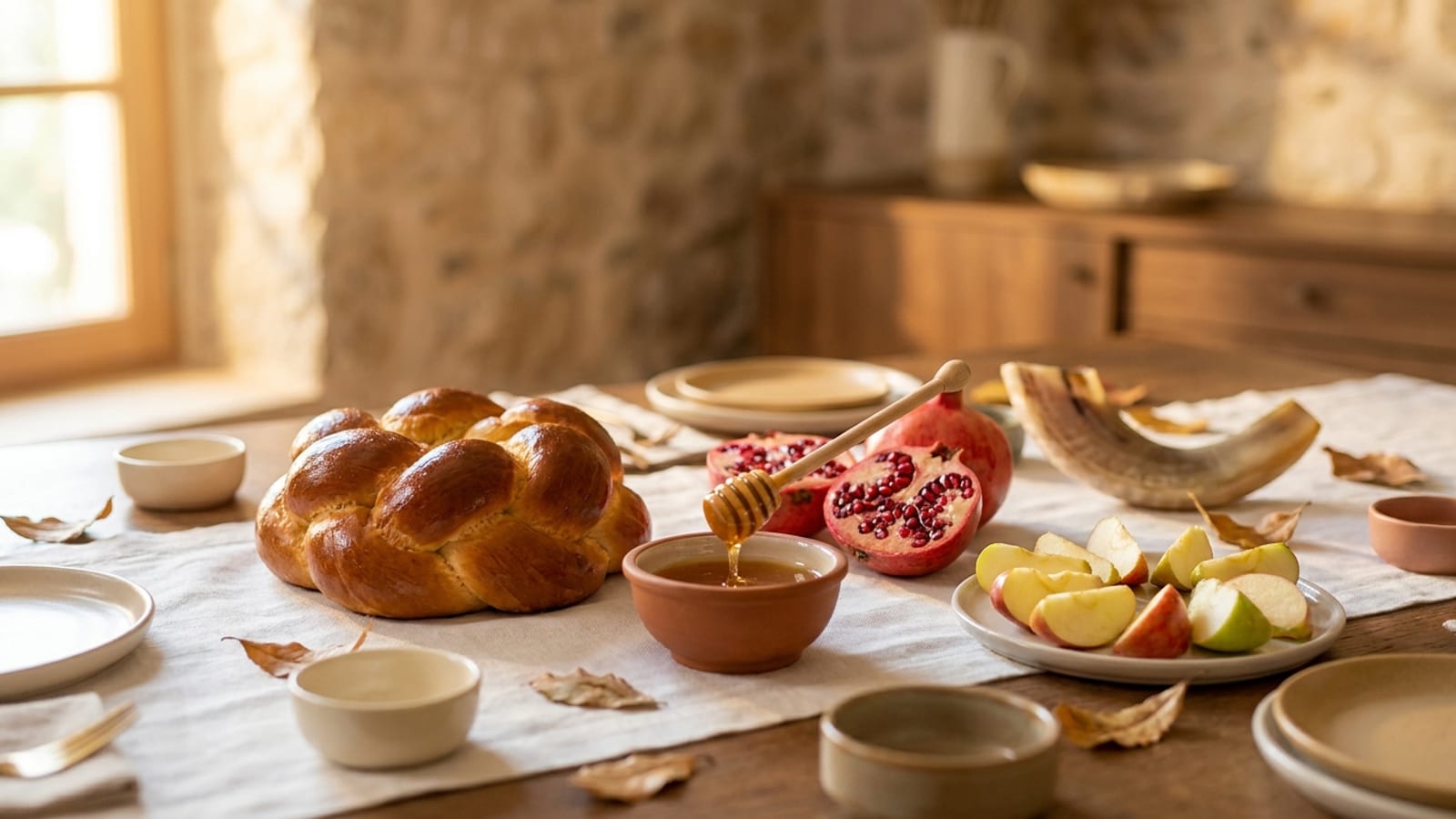
Yom Tov guide · this fall תשפ״ח / 2027
Rosh Hashanah 2027 in Jerusalem,
where the shofar carries further.
Hearing shofar at the Kotel. Midnight selichos through Elul. Davening Musaf with the entire city. Beginning the new year in Eretz Yisrael.
This season: Begins Friday evening, October 1, 2027 (candle lighting in Jerusalem ~5:44pm); Yom Tov Oct 1–3.
Still booking Rosh Hashanah 2027. Preferred rooms and multi-gen blocks go first — start a written match or call 1-855-JRM-TRIP.
Further out: Rosh Hashanah 2028 (תשפ״ט) — Sep 20–23 — after this season's inventory is handled.
Why Jerusalem for Rosh Hashana
There is no davening like Yamim Noraim davening in the Holy City. The Kotel plaza on Rosh Hashana morning draws thousands — each tekiah of shofar resonating against ancient stone, surrounded by Jews of every kehilla, every nusach, every corner of the world. It is a once-in-a-life experience that families describe as permanently changing how they hear shofar afterward.
Beyond the Kotel, Jerusalem's neighborhoods — Geulah, Meah Shearim, Rechavia, the German Colony — each host their own Yamim Noraim culture. The baalei tefillah, the niggunim, the specific tunes that a shul has used for three generations. Being in Eretz Yisrael for the Yamim Noraim is not just logistically different — it is spiritually different in ways that are hard to articulate until you've experienced it.
For families that have spent Rosh Hashana in the same shul for twenty years, this is the trip that resets the frame. For younger families building their own traditions, it is the trip that sets one.
The 2026 Dates — and the Shabbos Factor
Rosh Hashanah 5787 begins Friday evening, September 11, 2026 — candle lighting in Jerusalem at 6:10 PM (the city's 40-minutes-before-sunset custom) — and ends Sunday, September 13 at nightfall, 7:24 PM. The first day is Shabbos itself, which shapes the whole Yom Tov in 2026:
- Shofar only on day two. When the first day coincides with Shabbos, tekias shofar is deferred — the year's first tekios sound on Sunday, September 13, from every shul in the city at once. If shofar at the Kotel is the moment you're traveling for, it's a Sunday-morning plan.
- Tashlich moves to Sunday afternoon — the first-day custom is not done on Shabbos.
- Friday is short. Erev Rosh Hashanah 2026 is an Erev Shabbos too — hotels close check-in operations before 6:10 PM licht bentchen, and the city's pre-Yom-Tov rush compresses into the morning. Arrive Wednesday or Thursday.
- Three days of continuous Yom Tov quiet — Shabbos plus both days runs Friday night through Sunday night with no commerce or transit; anything you need, have in hand by Friday midday.
For the country-wide picture — the two-day question, what's open and closed across Israel, and Yom Kippur — see our Rosh Hashanah in Israel guide.
Selichos at the Kotel
Nothing prepares a family for Rosh Hashanah in Jerusalem like the weeks before it. From Rosh Chodesh Elul, Sephardi selichos fill shuls before dawn; Ashkenazim join from Motzaei Shabbos before the chag — September 5 in 2026. And at the Kotel, the season's signature scene: organized midnight selichos, nightly, with chazzanim and crowds that grow from hundreds to tens of thousands as the Yamim Noraim approach — on the final night before Yom Kippur, Israeli press has put the crowd at a hundred thousand, with overflow assemblies and screens across the plaza.
Going with a family: the main gatherings start around midnight and the plaza is at its most intense from then until about 2 AM. With older children, go once — it is the kind of thing they remember at their own children's bar mitzvahs. With younger children, the earlier-evening hours are calmer and still remarkable; the Kotel is open around the clock. Security lines at the Old City gates move slowly on peak selichos nights — budget for it, and plan the walk home (taxis thin out late; a hotel within reasonable distance of the Old City earns its keep this week).
If your trip starts before the chag, selichos week is the calm before Yom Tov — the Old City, the Kotel tunnels, and the neighborhoods are all open, with Elul already in the air.
Hotel Considerations for Yamim Noraim
Rosh Hashana hotel booking in Jerusalem moves faster than any other Yom Tov period. The combination of Rosh Hashana, Yom Kippur, and Sukkos within a four-week window means families often want to book all three in sequence — and the hotels fill accordingly. Families who contact us by Nissan are in a strong position; families who wait until summer are often choosing from what remains.
- Yom Tov meal programs: Verify in advance that your hotel runs a full Yom Tov meal program through both days of Rosh Hashana. Most mehadrin hotels do — but confirm the specifics: seudos, challah on Yom Tov, the menu for the Yom Tov night meals.
- Check-in / check-out policies: Hotels on our list generally allow check-in by 12:00pm on Erev Yom Tov and request check-out no more than one hour after Yom Tov ends. Coordinate your flight times accordingly — do not plan a same-night departure.
- Shofar blowing at the hotel: Ask whether the hotel organizes in-hotel shofar blowing. Some hotels arrange a minyan with a designated baal tokea; others direct guests to local shuls. Knowing in advance lets you plan your morning.
- Yamim Noraim pricing: Special pricing applies for the Tishrei period across all JRM-booked hotels. Book early for the best available rates — Yamim Noraim rates increase as availability tightens.
Which JRM Hotel for Rosh Hashana
All four of the kosher hotels in Jerusalem we book accommodate Rosh Hashana stays with Yom Tov meal programs and in-hotel or nearby minyan options. The right placement depends on your family's nusach, neighborhood preference, and kashrus standard — and, for families set on walking to the Wall on Yom Tov, on which hotels are closest to the Kotel.
- Yirmiyahu 33 — multiple minyanim across nuschaot; popular with American and European families.
- Prima Palace — well-positioned for families seeking the Geulah / Mea Shearim area.
- Haneviim Boutique — suits families requiring Badatz Eida HaChareidis and a central Haneviim Street location.
- Jerusalem Gate — full amenities with Rabbanut Mehadrin + OU supervision.
Special Yamim Noraim pricing applies across all four properties.
Shul Options in Jerusalem
Hotel shuls are typically open for Yamim Noraim, but Jerusalem's density of outstanding shuls is itself one of the reasons to come for Rosh Hashana. Within a short walk of any JRM hotel, families can find Ashkenaz, Sefard, Mizrachi, Chasidish (by dynasty), Yekke, and Sephardi minyanim — often multiple options within the same nusach.
Guests at Yirmiyahu 33 can consult our shuls near Yirmiyahu 33 guide for a neighborhood-level breakdown of minyan options, baalei tefillah, and which shuls are known for their Yamim Noraim davening specifically. For guests at other hotels, contact us — we know the shul landscape and will match you to the right one.
Tashlich
Tashlich is recited on the first day of Rosh Hashana in the afternoon (or the second day if the first day is Shabbos), near flowing water. In Jerusalem, families go to the Kotel-area — some walk to the Shiloach spring in the City of David, fed by natural water — or to any creek or spring accessible within walking distance.
The practice is to recite the prescribed verses near flowing water, symbolically casting away one's sins. Where exactly to go depends on your neighborhood and your family's custom; consult your rav if you have questions about which water source is sufficient. The Kotel plaza itself is not flowing water, but many families combine a first-afternoon Kotel visit with a short walk to a nearby stream.
We note this in the pre-arrival brief so families arriving for Rosh Hashana know where to plan the first afternoon's walk. The logistics are simple — it's a short walk for most JRM hotel locations — but knowing the destination in advance means one less thing to figure out between seudah and Mincha.
The Aseres Yemei Teshuvah
The ten days between Rosh Hashana and Yom Kippur — the Aseres Yemei Teshuvah — are a dimension of the Tishrei trip that families often underplan. In Jerusalem, these days have their own character: Avinu Malkeinu added to davening, Tzom Gedalia on the 3rd of Tishrei (pushed to the 4th when the 3rd falls on Shabbos), the Shabbos Shuva drasha, and a city-wide hum of introspection that is palpable even walking through ordinary neighborhoods.
Many families deliberately schedule their stay to span both Rosh Hashana and Yom Kippur so they experience the full arc in Eretz Yisrael.
If your trip covers all ten days, the middle days are an opportunity to visit sites you won't reach during Yom Tov itself — the Old City, the Kotel tunnels, the Ir David — and to attend shiurim and drashos that are uniquely concentrated in Jerusalem during this period. For the full Yom Kippur picture, including Kol Nidre at the Kotel and Neilah, see our Yamim Noraim in Jerusalem guide.
Practical Tips for Rosh Hashana in Jerusalem
- Bring your own machzor: Hotels may provide machzorim, but your own — the one with your marginalia, your family's niggunim, your nusach — is worth packing. It is not heavy. It is very worth it.
- White clothing for davening: Ashkenazim traditionally wear white (kittel or white shirt) for Rosh Hashana and Yom Kippur davening. Pack accordingly — dry-cleaning turnaround in Jerusalem during Tishrei is unpredictable.
- Plan for the three-day Yom Tov possibility: When Rosh Hashana falls on Thursday-Friday, Shabbos follows immediately — three days of Yom Tov/Shabbos combined. This requires eruv tavshilin (set on Wednesday before Yom Tov begins, to permit cooking on Friday for Shabbos). It also affects hotel meals and flight planning. Check the calendar for your year and plan accordingly.
- Yom Tov Sheini: Rosh Hashana is two days in Israel as well — no Yom Tov Sheini difference for the Rosh Hashana days themselves. However, if your trip includes Sukkos, consult your posek about second-day observance as an overseas guest in Israel.
- Arrive with time to settle: Erev Rosh Hashana is compressed — candle lighting, Mincha/Maariv, seudah. Plan to arrive at least two days before to settle in, walk the neighborhood, and find your shul before the days themselves arrive.
Rosh Hashanah in Jerusalem — Common Questions
When is Rosh Hashanah in Jerusalem in 2026?
Rosh Hashanah 5787 begins at candle lighting on Friday evening, September 11, 2026 — 6:10 PM in Jerusalem (the city’s 40-minutes-before-sunset custom) — and ends at nightfall on Sunday, September 13 at 7:24 PM. The first day coincides with Shabbos.
When is shofar blown in Jerusalem in 2026?
Only on the second day. Because the first day of Rosh Hashanah 5787 falls on Shabbos, the shofar is not sounded that day — the first tekios of the year are heard on Sunday, September 13, in every shul in the city.
When are selichos said at the Kotel?
Sephardi communities say selichos from the start of Elul; Ashkenazim begin on Motzaei Shabbos before Rosh Hashanah — September 5 in 2026. At the Kotel, organized midnight selichos gatherings run nightly through the season and grow enormously through the Aseres Yemei Teshuvah, peaking on the final night before Yom Kippur.
Is the Kotel open on Rosh Hashanah itself?
Yes — the Kotel plaza is open around the clock, every day of the year. On Rosh Hashanah morning it fills with minyanim of every nusach, and thousands walk there for davening. Reach it on foot on Yom Tov; there is no public transportation.
Do Jerusalem hotels serve Rosh Hashanah meals?
The kosher hotels run full Yom Tov meal programs through both days — seudos with simanim on both nights, Yom Tov day meals, and in-house or nearby minyanim. Confirm the specifics (menu, seatings, shofar arrangements) when you book; we put them in writing.
Related Yom Tov guides: Rosh Hashanah in Israel (the two-day question, what's open, Yom Kippur) · Yamim Noraim in Jerusalem (Yom Kippur, Kol Nidre, Neilah at the Kotel) · Sukkos in Jerusalem (sukkah specs, Chol HaMoed, Simchas Torah hakafos).
What it costs
As a rough planning range, standard-date rooms at the value and mid-tier hotels usually land around $200–$450 a night, running higher at the premium properties and across Shabbos and Yom Tov dates — we confirm exact current pricing with your quote. Full Yom Tov board programs are quoted per family. See our pricing page for the hotel-by-hotel table.
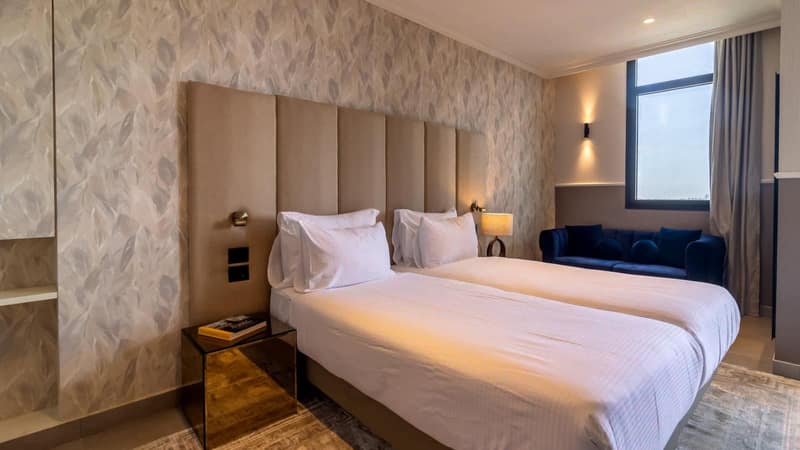
 Mehadrin by HaRav Efrati
 Romema
Yirmiyahu 33
A new, luxurious hotel on Yirmiyahu Street in Romema with Mehadrin kashrus supervised by HaRav Efrati and a full-time Mashgiach Temidi — plus pool, spa, underground parking with car charging, and ~5-minute walk to the central bus station and train.
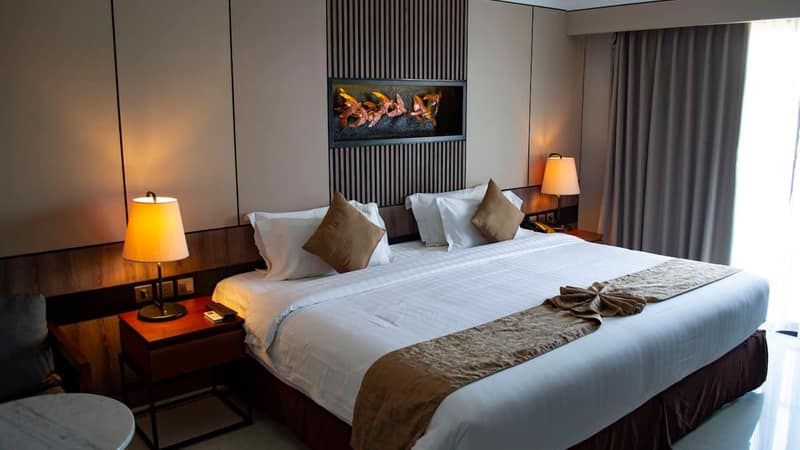
 Badatz Agudat Yisrael
 Pines Street
Prima Palace
A full-service kosher hotel at 2a Pines Street near Geulah and Mea Shearim with Badatz Agudat Yisrael kashrus, on-site mikveh and shul, daily Daf Yomi, free parking (limited, first come first serve), and easy access to the frum heart of Jerusalem.
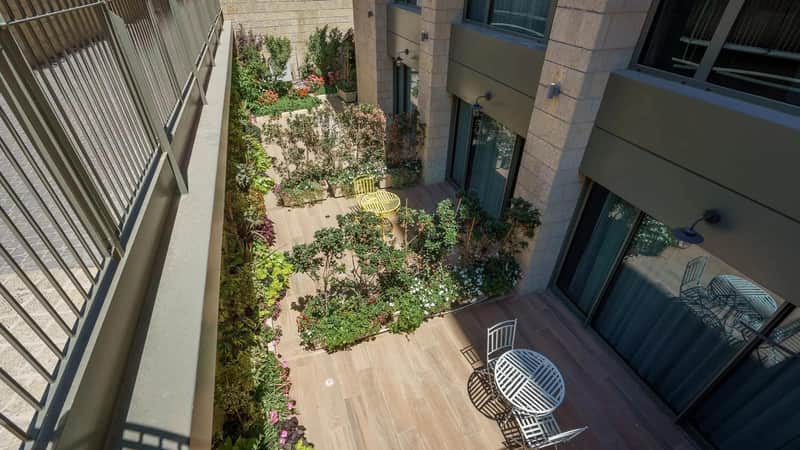
 Badatz Eida HaChareidis
 Haneviim Street
Haneviim Boutique
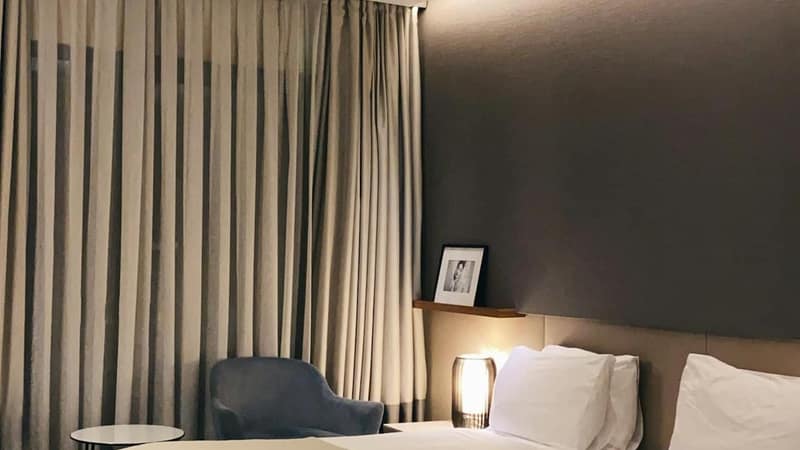
A boutique hotel and luxury apartment property on Haneviim Street with Badatz Eida HaChareidis kashrus — 49 hotel rooms and 8 apartments (2-night minimum, no meals), on-site mikveh and shul, daily Daf Yomi, rabbi on premises, and walking distance to the Old City.
 Badatz Mehadrin Rabbanut Yerushalayim
 Romema
Jerusalem Gate Hotel
The most affordable of the four JRM hotels — a 298-room glatt kosher hotel at 43 Yirmiyahu Street in Romema with Badatz Mehadrin Rabbanut Yerushalayim and OU supervision, direct access to Center One Shopping Mall and Fitness Club (free for guests), with light rail and central bus station nearby.
Ready to start?
Let's Plan Your Rosh Hashana
Yamim Noraim in Jerusalem fills early. Tell us your family's size, dates, and standard — we'll match you to the right hotel and handle the rest.
Plan Rosh Hashana in JerusalemRosh Hashana hotel packing realities
Simanim, machzorim, and kids’ quiet toys matter as much as room type. Hotels do not stock your minhag — pack the table items you care about.