
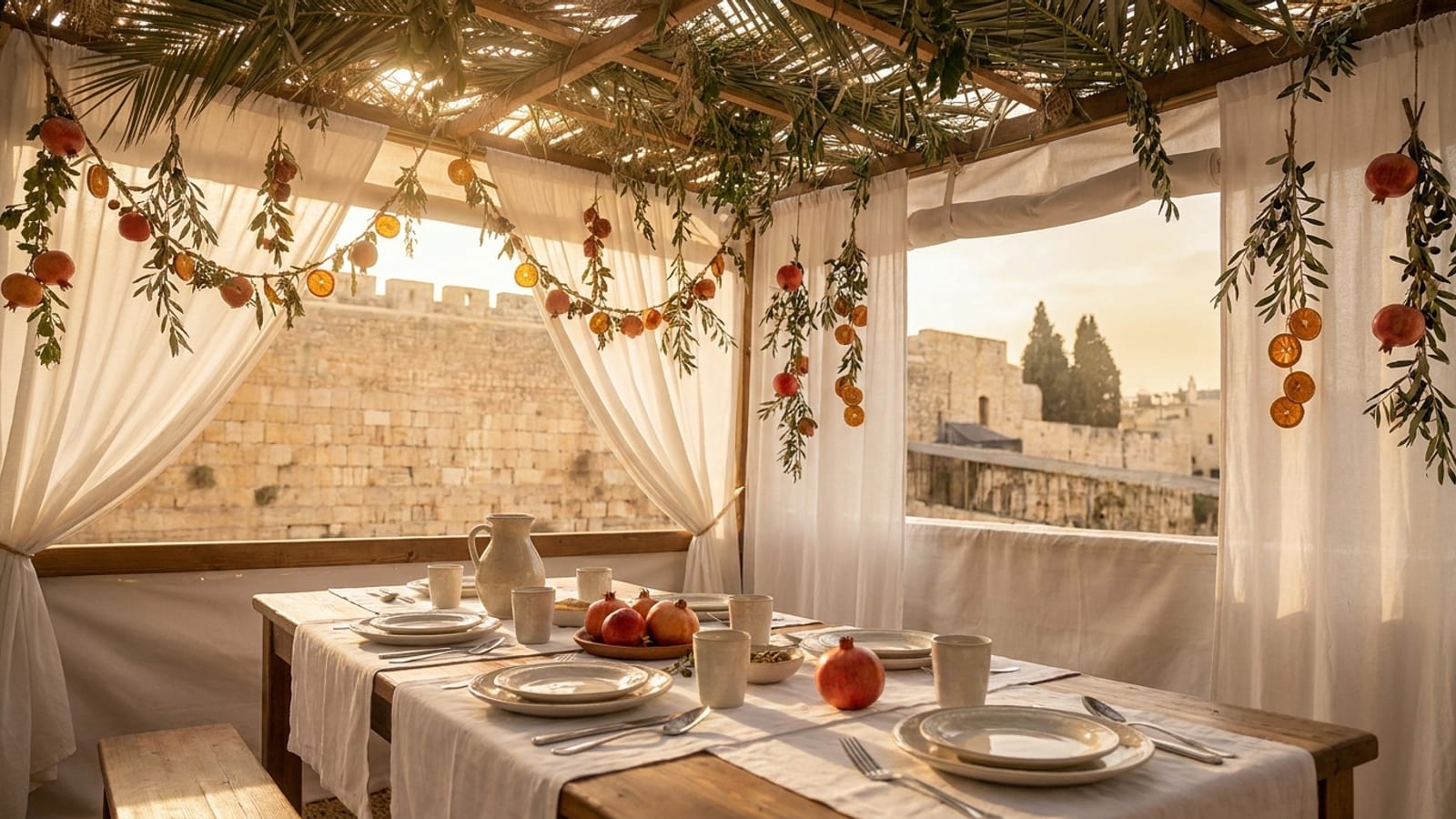
When Is Sukkot in Israel? (2026, 2027, 2028)
Sukkot begins on 15 Tishrei, two weeks after Rosh Hashanah. The start date is the same worldwide — what differs in Israel is how the days divide (see below):
| Year | Begins (evening) | First day | Shemini Atzeret / Simchat Torah (Israel) |
|---|---|---|---|
| 2026 (5787) | Friday, September 25 | Shabbos, September 26 | Shabbos, October 3 |
| 2027 (5788) | Friday, October 15 | Shabbos, October 16 | Shabbos, October 23 |
| 2028 (5789) | Wednesday, October 4 | Thursday, October 5 | Thursday, October 12 |
For 2026 in Jerusalem: candle lighting Erev Sukkot is 5:52 PM on Friday, September 25 (Jerusalem's 40-minutes-before-sunset custom); Yom Tov ends Motzaei Shabbos at 7:07 PM. Hoshana Rabbah candles Friday, October 2 at 5:43 PM lead straight into Shemini Atzeret/Simchat Torah on Shabbos, which ends October 3 at 6:58 PM. Confirm exact times for your city against a current luach.
How Many Days Is Sukkot in Israel?
Sukkot itself is seven days everywhere — but in Israel only the first day is Yom Tov. The structure in Israel for 2026:
- Day 1 — Yom Tov (Shabbos, Sep 26): full holiday restrictions, as on Shabbos.
- Days 2–6 — Chol HaMoed (Sun, Sep 27 – Thu, Oct 1): the "weekday festival" — meals still in the sukkah, arba minim each morning, but the country is open, traveling, and celebrating.
- Day 7 — Hoshana Rabbah (Fri, Oct 2): the last day of Chol HaMoed, with its own solemn character and customs.
- Then: Shemini Atzeret / Simchat Torah in one day (Shabbos, Oct 3): technically a separate Yom Tov — and in Israel the Torah-completion celebrations of Simchat Torah fall on the same day, not the day after.
Outside Israel, the first two days are Yom Tov and Shemini Atzeret and Simchat Torah are two separate days. Visitors from abroad traditionally keep their second days of Yom Tov even while in Israel — how exactly to conduct yourself is a matter for your rav before the trip.
What Israel Is Actually Like During Sukkot
Nowhere else does Sukkot happen at national scale. In the days before the chag, sukkahs appear everywhere — apartment balconies stacked twenty stories high, restaurant patios, hotel pool decks, hospital courtyards, army bases, highway rest stops. Lumber and schach sellers take over parking lots; arba minim markets fill with buyers examining esrogim under jewelers' loupes.
Then the holiday splits into two rhythms. Yom Tov is Shabbos-quiet — commerce stops, roads empty, families eat and sleep in the sukkah. Chol HaMoed is the opposite: the single busiest domestic-travel week of the Israeli year. Schools are on vacation and most workplaces close or run half-days, so the entire country goes out — national parks, hiking trails, museums, zoos, beaches, and family attractions all run special holiday programming at full capacity. If you are visiting, this is the week you experience Israel at its most alive — and its most crowded.
The week closes with Hoshana Rabbah's aravos at dawn, Shemini Atzeret's prayer for rain, and Simchat Torah's hakafos — which in Jerusalem spill from the shuls into the streets. In many Israeli cities there are also Hakafot Shniyot, public "second hakafos" celebrations with live music after the holiday ends, bridging the gap with Jews abroad still celebrating Simchat Torah that night.
Events Across the Country — and Why Jerusalem Is the Center
Every region runs Chol HaMoed festivals, but the anchor events of the week are in Jerusalem:
- Birkas Kohanim at the Kotel — the mass Priestly Blessing, held twice during Chol HaMoed (in 2026: Monday, September 28 and Thursday, October 1), drawing tens of thousands.
- Simchas Beis Hashoeiva — nightly music-and-dancing celebrations in yeshivos and chassidic courts, the biggest of them in Jerusalem's Geulah and Meah Shearim neighborhoods. What it is and where to see it →
- The Jerusalem March — the decades-old Chol HaMoed parade through the city center, alongside municipal festivals in the parks.
- Street hakafos on Simchat Torah — unique to Jerusalem's frum neighborhoods.
We wrote a dedicated day-by-day companion: Sukkot in Jerusalem 2026 — events, dates, and what it's actually like. Elsewhere, Chol HaMoed concert series and family festivals are announced in late summer each year — check listings close to the chag.
Sukkot Programs in Israel — How They Work
Like Pesach, Sukkot has grown a market of organized hotel programs: an operator takes over part or all of a hotel and provides catered Yom Tov and Chol HaMoed meals under one hashgacha, a hotel sukkah large enough for every guest, minyanim, kids' programming, and often entertainment and shiurim. Programs run in Jerusalem, at the Dead Sea, and in the north, and are typically priced per person for the full holiday or per night.
The alternative — the one we arrange — is booking a kosher hotel that runs Sukkot properly as a matter of course: a certified sukkah with confirmed specifications, Yom Tov meal programs, and a location that puts you inside the celebration rather than commuting to it. For most families visiting Jerusalem for Sukkot, a well-chosen hotel accomplishes what a program does, with more flexibility on dates and budget.
Whichever route you take, the questions to ask are the same: Whose hashgacha covers the kitchen and the sukkah? Is the sukkah big enough for every guest at once, or seated in shifts? What's the rain plan? Are meals in the sukkah on Chol HaMoed too, or Yom Tov only? Our Sukkos hotels in Jerusalem page covers the hotel-by-hotel picture.
Coming to Israel for Sukkot 2026? We book Jerusalem's kosher hotels — sukkah specs confirmed in writing, Yom Tov meals arranged, and Chol HaMoed planned around the real crowd patterns.
Start the conversationVisiting Israel During Sukkot — the Practical Part
- Flights: Tishrei is the most in-demand travel window of the Israeli year. As of mid-2026 El Al carries most North American traffic, with Delta and United targeting September resumptions — verify with the airline and book months out. Fly in by Wednesday or Thursday (Sep 23–24) to beat the Erev Sukkot Friday crunch.
- Crowds and prices: Hotels sell out and rates peak — this is high season plus a national vacation week. Chol HaMoed attractions are busiest late morning to mid-afternoon; go early.
- Driving: Chol HaMoed traffic on intercity highways is heavy, especially toward the north and the Dead Sea. Inside Jerusalem, walk and use light rail or taxis.
- Weather: Late September is warm and dry — Jerusalem days around 29–32°C (mid-80s°F), cool evenings in the hills, sukkah nights that genuinely want a sweater. By early October there's a small but real chance of the season's first rain — exactly when the davening turns to Mashiv Haruach.
- What's closed: Yom Tov days shut the country down like Shabbos (both ends of the week — and in 2026 both fall on Shabbos anyway). Chol HaMoed, nearly everything is open.
- Eating in a sukkah away from your hotel: many kosher restaurants build their own sukkah for the week — but not all, and seats go fast at lunch. Plan Chol HaMoed day trips around where you'll eat.
Where to Base Yourself
Jerusalem is the default answer, and for good reason: the Kotel events, the street-level festivity of the frum neighborhoods, the density of kosher restaurants with sukkahs, and Simchat Torah like nowhere on earth. Start with our Sukkot in Jerusalem guide and the kosher hotels in Jerusalem directory.
Families splitting the week sometimes pair Jerusalem with the north (see glatt kosher hotels in Tzfat) or the Dead Sea (mehadrin options at the Dead Sea) for Chol HaMoed — workable, but confirm the sukkah situation at any non-Jerusalem stop before committing, and expect holiday traffic on the way.
Sukkot in Israel — Common Questions
How many days is Sukkot in Israel?
Seven days. In Israel only the first day (15 Tishrei) is Yom Tov; the next six days are Chol HaMoed, ending with Hoshana Rabbah. Immediately after comes Shemini Atzeret, which in Israel is combined with Simchat Torah in a single day. Outside Israel the first two days are Yom Tov and Shemini Atzeret and Simchat Torah are two separate days.
When is Sukkot in Israel in 2026?
Sukkot 5787 begins at candle lighting on Friday evening, September 25, 2026. The first day of Yom Tov is Shabbos, September 26; Chol HaMoed runs Sunday, September 27 through Thursday, October 1; Hoshana Rabbah is Friday, October 2; and Shemini Atzeret/Simchat Torah falls on Shabbos, October 3.
What is Sukkot like in Israel?
It is a national holiday week. Schools are on vacation, much of the country takes off work, and sukkahs go up everywhere — apartment balconies, restaurant patios, hotel terraces, even gas stations. Yom Tov itself is quiet like Shabbos; on Chol HaMoed the whole country is out — parks, national trails, museums, and family attractions run at full capacity.
Are stores and restaurants closed in Israel during Sukkot?
Only on the Yom Tov days — the first day (with Erev Sukkot closing early) and Shemini Atzeret/Simchat Torah at the end, when stores, restaurants, and public transit shut as on Shabbos. During the Chol HaMoed days in between, nearly everything is open, and many kosher restaurants serve meals in their own sukkah.
Do visitors to Israel keep one day of Yom Tov or two during Sukkot?
Israelis keep one day. Visitors from outside Israel traditionally observe the second day of Yom Tov as well, even while in Israel — but practice varies by community and situation, so consult your rav before the trip about the second day of Sukkot and of Shemini Atzeret/Simchat Torah.
Is Sukkot a good time to visit Israel?
It is one of the best — and one of the busiest. The weather is warm and dry, the atmosphere is festive nationwide, and Jerusalem in particular is extraordinary. But it is peak domestic-travel season: flights and hotels fill months ahead and Chol HaMoed attractions are crowded. Book early and plan Chol HaMoed outings for early mornings.
Related guides: Sukkot in Jerusalem 2026 · Sukkos hotels in Jerusalem · Simchat Beit HaShoeva explained · Rosh Hashanah in Israel